
PVC or aluminium: how to choose for your doors and windows?
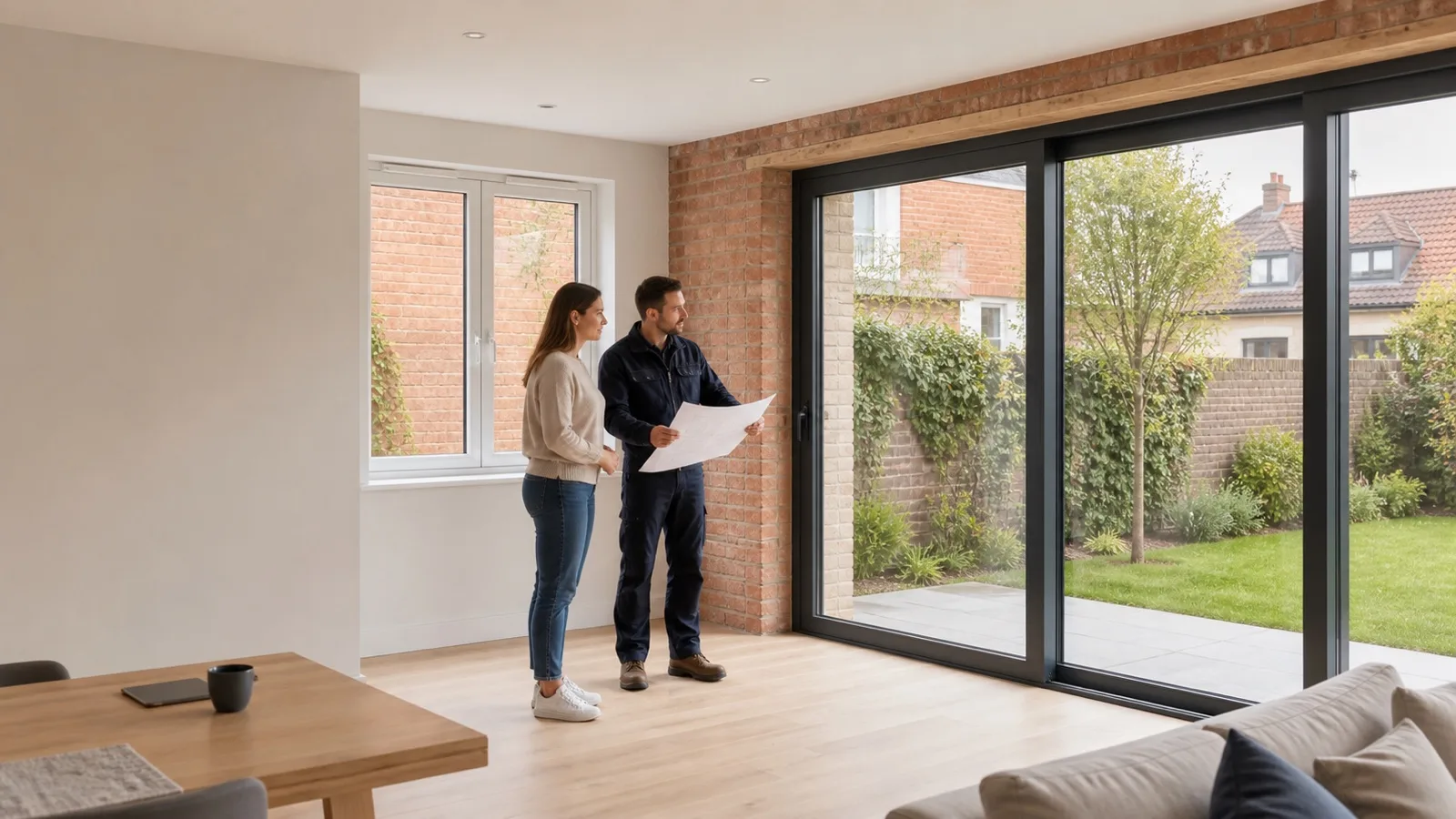
PVC or aluminium? Both materials now make it possible to produce doors and windows that are high-performing, durable and available in many finishes. The best choice depends above all on the dimensions, the style sought, the level of insulation, the exposure and the budget.
PVC generally stands out for its excellent balance between price and insulation. Aluminium offers more rigidity and makes it possible to design large glazed surfaces with slimmer sections.
In some projects, the most sensible solution is to combine the two: PVC for standard windows and aluminium for a large sliding bay, for example.
PVC and aluminium: a quick comparison
| Criterion | PVC | Aluminium |
|---|---|---|
| Initial budget | Generally more affordable | Generally higher |
| Thermal insulation | Naturally favourable | Very high with a suitable thermal break |
| Large dimensions | Possible depending on the system | Particularly suited |
| Slimness of profiles | Profiles generally more visible | Slimmer sections |
| Colours and finishes | Wide choice of foils and coatings | Very extensive colour palette |
| Maintenance | Simple | Simple |
| Acoustic insulation | Depends mainly on glazing and fitting | Depends mainly on glazing and fitting |
| Style | Classic or contemporary | Often favoured for clean architecture |
These general trends do not replace an analysis of the products actually offered. A high-end PVC window can outperform an entry-level aluminium one, and vice versa.
What really needs to be compared
Before examining the advantages of each material, it is important to understand that a window forms an assembly made up of several elements:
the outer frame and the sash
the glazing
the spacer between the panes of glass
the seals
the hardware
the joints with the building
the fitting method
To compare thermal insulation, look first at the Uw value, which represents the performance of the complete window. The lower this value, the more heat loss is limited.
The Uf value concerns only the profile, while the Ug value concerns the glazing. An excellent Ug value does not, on its own, guarantee a high-performing window.
The advantages of PVC
Excellent thermal insulation
PVC conducts little heat. Combined with a multi-chamber design, high-performance seals and suitable glazing, it delivers very good insulation values.
This characteristic makes PVC particularly attractive for:
replacing standard windows
energy renovations
bedrooms and living areas
projects where the budget must stay controlled
homes with many openings
The result nonetheless depends on the complete system and the fitting. The number of chambers in the profile should not be used as the sole basis for comparison.
A generally more affordable budget
For comparable dimensions, glazing and configuration, PVC is usually less expensive than aluminium.
It therefore makes it possible to fit out several openings on a more contained budget, without necessarily giving up good thermal performance, quality hardware or contemporary finishes.
Limited maintenance
A PVC window normally needs no repainting. Periodic cleaning with water and a mild product is generally enough.
The seals and hardware must nonetheless be checked and maintained, as on any window.
Many colours and finishes
PVC is no longer limited to white. Current ranges offer, among others:
solid colours
decorative foils
wood effects
metallic finishes
matt finishes
a different colour inside and out
exterior aluminium cladding on certain systems
The choice must be made when ordering, as repainting a PVC window later is generally not advisable.
The limits of PVC
Generally more visible profiles
To ensure their stability, PVC windows usually use larger sections than the slimmest aluminium systems.
The glazed surface can therefore be slightly reduced, particularly on a window made up of several sashes or mullions.
The new generations of profiles have, however, made great progress. Some systems now offer straighter, more discreet lines.
Limits to check for large dimensions
PVC can suit many French doors and sliding bays. It is not, however, always the most suitable solution for very tall, very wide or particularly heavy elements.
The possibilities depend on:
the profile system
the reinforcement used
the colour
the weight of the glazing
the hardware
the exposure to wind
the type of opening
You should therefore check the dimensions and weights allowed by the manufacturer rather than applying a general rule.
A sensitivity to temperature variations
PVC expands under the effect of heat. Quality systems are designed and reinforced to manage these movements, but this characteristic must be taken into account for large dimensions and dark colours heavily exposed to the sun.
It would therefore be inaccurate to claim that PVC can never warp or fade. Its stability depends on the quality of the system, the manufacture, the exposure and the fitting.
The advantages of aluminium
Great rigidity
The rigidity of aluminium makes it possible to design large elements capable of supporting heavy glazing.
It is particularly attractive for:
large sliding bays
floor-to-ceiling openings
large doors
assemblies with vast glazed areas
architectural projects with clean lines
Each project must nonetheless respect the limits of the chosen system and be correctly sized.
Slimmer sections
Aluminium generally makes it possible to reduce the visual width of the frames and sections. A greater part of the opening can thus be devoted to the glazing.
This favours:
the entry of natural light
the view outside
a more minimalist look
the integration of very large glazed surfaces
A vast choice of colours
Aluminium profiles can be powder-coated in many colours and given different textures or levels of gloss.
It is notably possible to choose a different colour inside and out to match the façade and the interior decoration.
Good stability over time
With a suitable finish and regular care, aluminium resists the weather well and requires little maintenance.
Like PVC, it must however be cleaned periodically. The seals, drainage, rails and mechanisms remain wear parts that must be checked.
The limits of aluminium
A generally higher cost
Aluminium usually represents a greater investment than PVC, particularly for very insulating systems, large dimensions and special finishes.
This difference can be justified when the project requires:
very slim sections
great rigidity
heavy glazing
a very large opening
a precise architectural colour or finish
For a standard window, the technical advantage of aluminium is not always necessary.
The importance of the thermal break
Aluminium naturally conducts heat. Modern aluminium windows intended for the home therefore use a thermal break that separates the interior and exterior parts of the profile with insulating materials.
With a high-performance design and suitable glazing, an aluminium window can reach an excellent level of insulation. It is therefore no longer correct to claim that aluminium necessarily insulates poorly.
The Uw value of the complete window remains the best way to compare two proposals.
Which material offers the best acoustic insulation?
PVC is often presented as automatically superior on the acoustic front. In practice, the result depends mainly on:
the make-up of the glazing
the different thickness of the panes of glass
the possible presence of acoustic laminated glazing
the tightness of the seals
the number and type of sashes
the roller-shutter boxes
the ventilation grilles
the quality of the joints and the fitting
An aluminium window fitted with suitable acoustic glazing and correctly installed can therefore outperform a PVC window with standard glazing.
Ask for the acoustic performance of the complete window rather than relying on the profile material alone.
And for summer comfort?
The frame material is not enough to prevent a room from overheating. For a large glazed surface exposed to the sun, you must also examine:
the orientation
the solar factor of the glazing
the glazed surface
the exterior solar protection
night-time ventilation
roof overhangs and shading
A perfectly insulating bay can still cause overheating if it lets in too much solar radiation and has no suitable protection.
PVC or aluminium for a front door?
For a front door of standard dimensions, PVC can offer good insulation and attractive value for money.
Aluminium is often favoured for:
very wide or very tall doors
heavy panels
particularly slim lines
very dark colours
compositions with large glazed areas
Security does not, however, depend on the material alone. You must also examine the lock, the number of locking points, the hinges, the panel, the glazing and the quality of the fitting.
Can you combine PVC and aluminium?
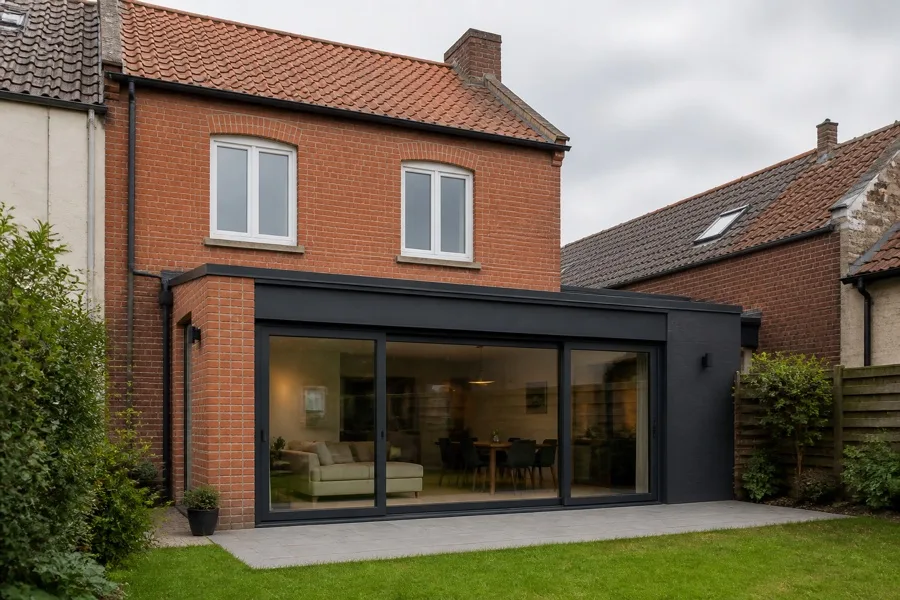
Yes. It is not compulsory to choose the same material for all the joinery in a home.
A sensible combination can be:
PVC windows for bedrooms and standard openings
a large aluminium sliding bay in the living room
an aluminium front door
coordinated colours to keep a harmonious façade
This approach makes it possible to use each material where its characteristics are genuinely useful, while keeping the overall budget under control.
How to make the right choice?
Before deciding, ask yourself the following questions:
What are the dimensions of each opening?
Is it a fixed, opening or sliding frame?
What Uw value do you want to reach?
What glazed surface do you want to keep?
What is the weight and type of glazing?
Is the façade heavily exposed to the sun or wind?
What level of acoustic insulation are you looking for?
What colour and style do you want?
What budget is available for the whole project?
Must all the joinery be made from the same material?
In conclusion
Choose PVC if your priority is good insulation and a controlled budget for openings of standard dimensions.
Aluminium becomes particularly attractive for large bays, heavy glazing, slim sections and projects with a very contemporary aesthetic.
In many cases, combining the two materials delivers the best balance between performance, architecture and budget.
Pulsar Windows analyses each opening to steer you towards a sensible solution. All our installations are carried out by our own team, with no subcontracting. Request your free, no-obligation quote in Brussels or in Flemish and Walloon Brabant.
A window project?
Tell us about your project to receive a tailored proposal.